Chapter 3
What Health Actually Means
A companion guide for people currently reading this chapter. You can start here.
Book companion
Jump to a chapter
The question this chapter addresses
What does health include when we look at the whole life?
In plain language
Chapter 3 connects five qualities of being with the way your body, attention, energy, choices and environment work together. The purpose is a life that authentically reflects your unique consciousness and feels worth living. The published definition is quoted in full below.
Chapter 3 · As I have come to understand it
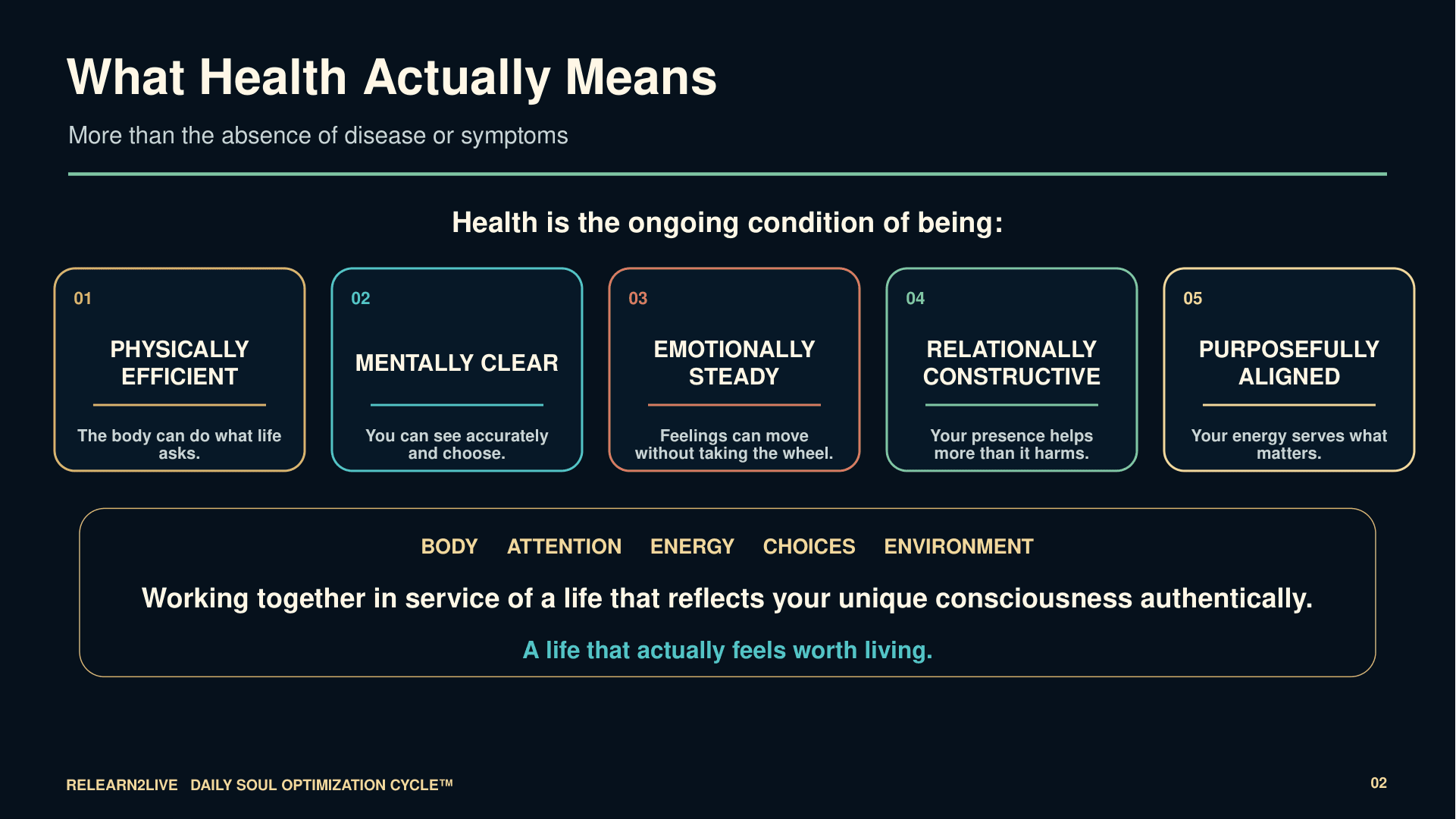
Health is the ongoing condition of being:
- Physically efficient
- Mentally clear
- Emotionally steady
- Relationally constructive
- And purposefully aligned
…so that:
- Your body,
- your attention,
- your energy,
- your choices,
- and your environment
are all working together in service of a life that reflects your unique consciousness authentically... a life that actually feels worth living.
Ideas
Three ideas to notice
- 01
Five qualities of being describe health: physically efficient, mentally clear, emotionally steady, relationally constructive, and purposefully aligned. Then body, attention, energy, choices, and environment have to work together.
- 02
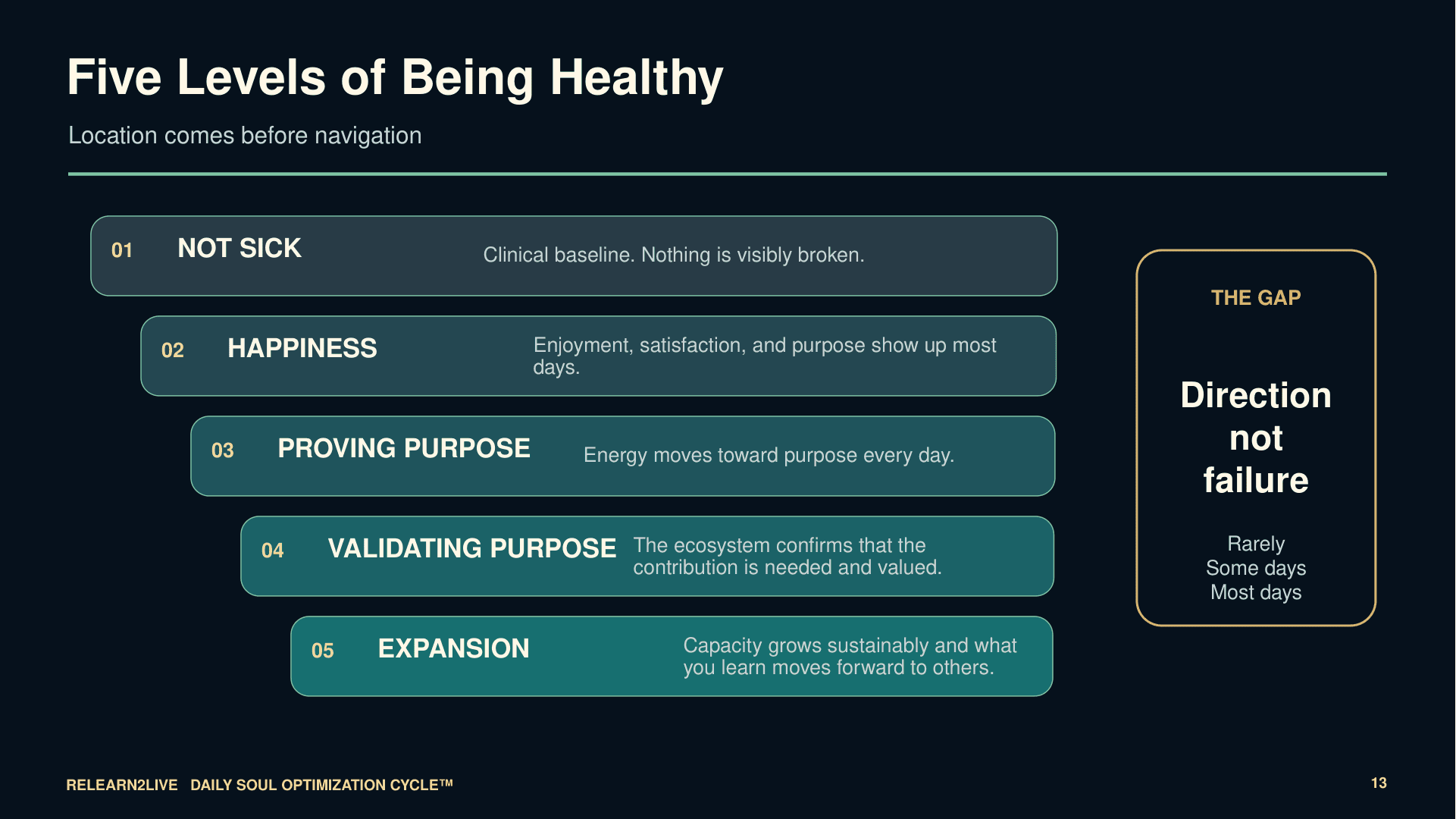
Five levels describe current location and a next horizon: Not Sick, Happiness, Proving Purpose, Validating Purpose, and Expansion. This is a separate teaching model from the five qualities of being.
- 03
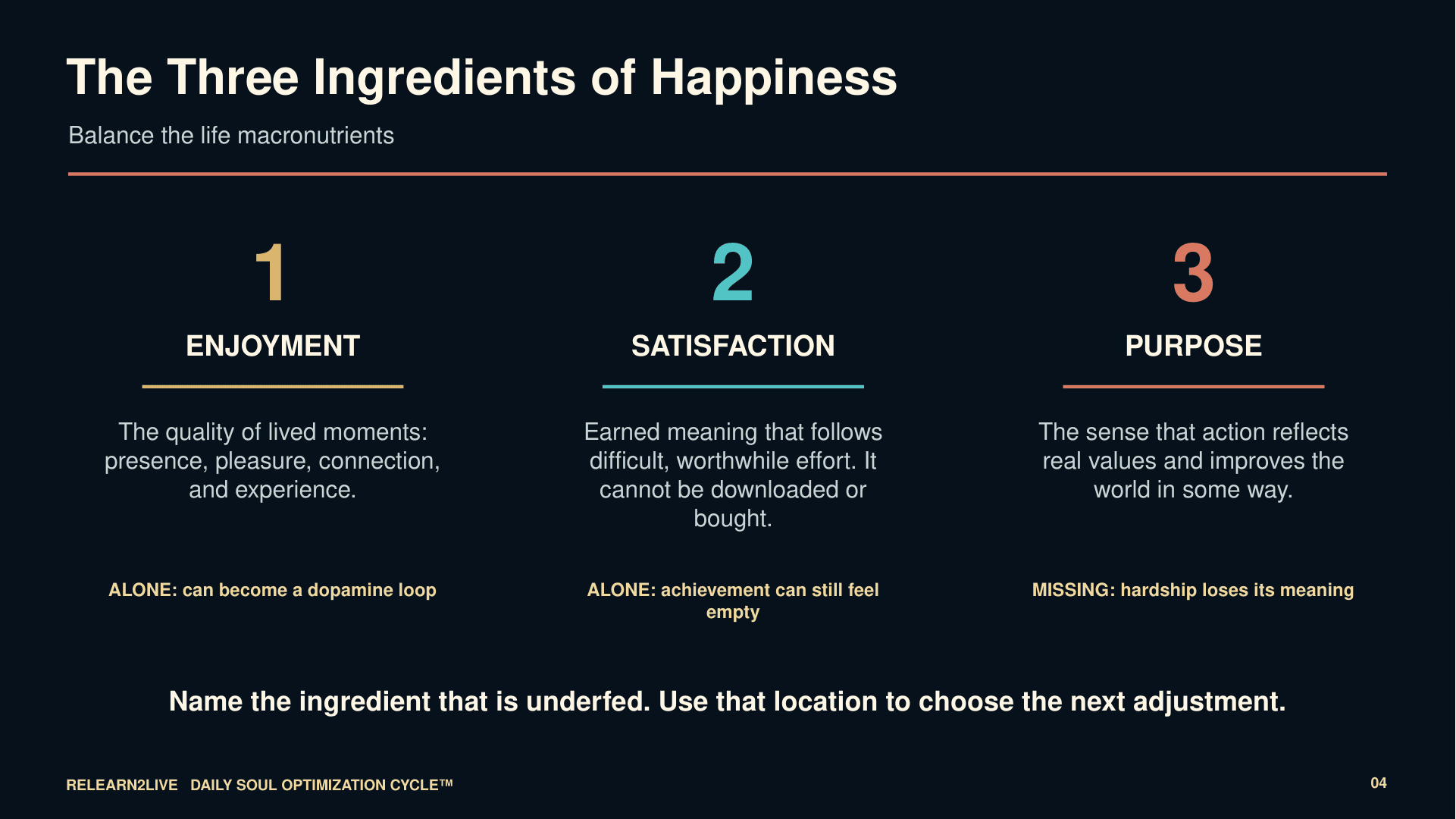
Three ingredients help examine happiness: enjoyment, satisfaction, and purpose. The chapter invites you to notice their balance in your own life.
Maps and teaching
See the maps
These three maps are related, and they are not one diagram.
Pause
Reflect
Which part of health receives most of your attention?
Which part becomes easier to overlook?
How might one of them support another?
Practice
Try
Choose one small action that serves two parts of life you care about. A conversation during a comfortable walk, time preparing for a meaningful task, or a quiet check-in before responding are examples to consider and adapt, not a required routine.
This guide is original companion teaching. It does not replace the complete book.